How to Read Plant Labels Like a Pro – It’s the best feeling for gardeners to buy their favourite seeds or seedlings and embark on a mission to plant them in their home garden. On the other hand, what if you don’t know how to proceed from here? There’s absolutely no need to worry, because usually seeds come with quite useful little labels that tell you everything you need to know. This is particularly important if you’re a beginner. Once you become proficient in interpreting these labels, you can guarantee that your flora will thrive in their designated areas.
This, in turn, saves you the frustration and money wasted on the wrong purchases. Here is how to decipher those labels.
How to Read Plant Labels Like a Pro
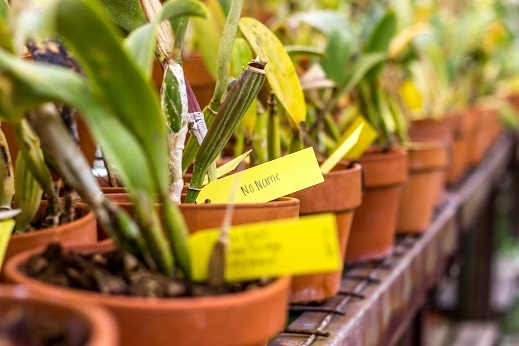
Decoding Plant Labels
These tags often display botanical names in universal terminology, enabling you to accurately identify a specific plant. For an inexperienced layman, though, they can read as a foreign language.
For instance, many flowering plants are called “buttercups,” yet the term “ranunculus” refers to their encompassing genus. This specific genus houses over a hundred blossoming species. Being familiar with plant families is the first step in the right direction.
It is also a really great source for information concerning all the care that these certain breeds will need, along with good warnings of problems and pests that spring up.
By learning these terms, you will be able to enhance your horticultural repertoire, get the most out of your garden, and, more importantly, keep flora healthy and strong.
Requirements
You should be aware of each plant’s requirements when it comes to exposure to sunlight. Some types need to be placed in an area fully lit, which means they should receive direct sunlight for at least 6 hours every day.
Partially shaded ones are to be given areas of dappled sunlight in most conditions and when shades are provided by taller plants or nearby structures.
Watering Needs
Proper irrigation is just as important. The indicative labelling on plant containers can provide beneficial guidance here as well.
Drought-tolerant plants need a spot with little rainfall and infrequent watering. Water-intensive plants prefer humid conditions and need water often.
Following these specific guidelines according to the weather and the type of plant you have helps to avoid wilting and root rot.
Soil Properties
The soil type plays a vital role in plant health as well. It is one of the most important factors highlighted on their care tags. Read carefully the features described on the label, such as soil texture, structure, and moisture retention capacity.
Does your soil meet these requirements? If not, just make the necessary adjustments so that it can become the new cosy home for your flora.
Changes could include adding compost to enhance fertility, or simply just sand to improve drainage capacity.
If assessing the condition of your garden sounds like a difficult task to take on, no worries. You can always leave it to a team of professional gardeners. They will create the perfect soil foundation for all your plants to be happy and thrive.
Growth Information
To create a healthy and cohesive-looking garden, you must consider the eventual size of the plants you are growing.
The good news is that the label will have specific details about the plant’s height after growth, as well as the rate at which it spreads. This allows you to plan accordingly where in your garden it should be.
To give an example, a mighty shrub that grows to six feet tall and spreads four feet wide will need plenty of space to avoid overcrowding any plants next to it. Otherwise, it will not reach its full potential, causing the surrounding plants to suffer heavily too.
Plants grow at different rates. Fast growers like bamboo need regular pruning. Slower growers like Japanese maples require less.
For proper spacing, measure the space your garden will take, and ensure that it meets the recommendations on the label for spacing.
This will prevent overcrowding and ensure your plants get enough sunlight and nutrients to thrive.
Hardiness Zones
Hardiness zones reflect the average annual temperature at which a plant can thrive. To ensure that it can survive in your specific climate, compare the rating on its tag to hardiness maps from local gardening organisations in your area.
Those that prefer hotter conditions, like oleanders, for example, cannot survive the typical British winter.
Orchids respond to fluctuations in temperature and require great care to thrive. Your garden will be filled with life and colour throughout the year if you choose plants that grow best in your zone.
Symbols and Abbreviations
When you are reading a label, pay close attention to the little symbols. They give you quick and valuable information about a plant’s primary traits so you can make the right purchase without much hassle.
A leaf symbol usually indicates that the plant is organic and was not fertilised with toxic chemicals.
A shield, on the other hand, means that the species you are eyeing fights off bugs and insects pretty well, so you will not need extensive pest control.
Furthermore, a droplet symbol could mean that the plant in question does not need much water, which is perfect for dry gardens.
If you are puzzled by a symbol, just look at the label’s legend for help. It will explain in detail all the symbols and abbreviations used.
Using Labels to Avoid Common Gardening Mistakes
All of this information can greatly reduce the likelihood of common mistakes. Overwatering is effortlessly avoided if you follow the label’s instructions properly.
Some plants, described as “humidity-loving,” prefer to grow in consistently moist soil. Others, labelled as “dry-adapted,” require much less water. Knowing these differences helps you provide the right care without risking root rot or impaired growth.
Put plants that need direct sunlight in a sunny spot. Check the tags for light and water needs to help them thrive.
Placement is also crucial. Accurately estimating a plant’s maximum size allows you to give it enough space to live up to its full potential.
For instance, if a tree is expected to grow up to 5 feet wide, it should not be planted too close to others. Otherwise, this would deprive it and its neighbours of the sunlight and nutrients they need.
Conclusion
Mastering the skill of reading plant labels can significantly enhance your gardening abilities. When you have a thorough understanding of the concise information highlighted on those small tags, you become better equipped to make informed decisions.
This does not just determine the types of flora you buy. It also dictates your maintenance routine.
By taking all of the above factors into account, you can design a beautiful garden that stays healthy and vibrant for many years to come.

About Debz Louise
Debz Louise is a UK-based lifestyle expert and the founder of several lifestyle blogs, including Wannabe Princess and Under 5s. Specializing in everything from interior design and home renovation to body-positive fashion and early years development,